
Motherhood Begins with Care: A Complete Antenatal Checklist

Having a healthy child is a dream of every expecting couple.So, everyone is expecting a healthy and joyful antenatal journey. Good antenatal care throughout pregnancy is one of the best ways to improve a healthy birth. Going early and regularly for antenatal check-ups to your best gynecologist is important. This will help mommies-to-be and their babies stay healthy. You should plan your first visit to your gynecologist as early as possible, ideally within the first 6–8 weeks of your pregnancy. After the first antenatal check-up, your obstetrician will schedule your antenatal visits as per your pregnancy condition. If your first visit is normal, then this will guide you to visit the maternity hospital: Your gynecologist will monitor your health and your baby’s growth. Also, they will ask you to do routine laboratory testing to find out expected complications and guide you accordingly. During antenatal check-ups, you can ask your questions. These regular antenatal visits will be a great way to learn how to ease any discomfort you may have and get answers to your doubts about your pregnancy and birth of your baby. With good antenatal care, you can reduce unexpected or expected complications beforehand, so your motherhood journey will be safe. Your obstetrician will also guide you regarding healthy diet and exercises that are helpful. Common problems such as pregnancy-induced hypertension and gestational diabetes can be detected early, so that their complications are reduced due to regular antenatal check-ups. Ultrasound is a great technology to help your gynecologist and you to guide about your baby’s development and growth. Your gynecologist may suggest you undergo multiple ultrasounds during each trimester to know about the baby’s health. These are of utmost importance. An ultrasound may detect a problem early, which helps your gynecologist provide better treatment and make timely decisions. You should choose the best maternity hospital having NICU facilities along with proper mother care to avoid any complications. To keep you and your baby healthy and safe, it is important to avoid smoking and drinking any kind of liquor.You should have healthy meals and regular exercise, along with regular antenatal checkups with your gynecologist at the best maternity hospital. Book an Appointment Today! Are you looking for the best gynaecologist in Wagholi for checkups, pregnancy care, or fertility treatments? Dr. Shailaja Pachundkar is your answer.

Motherhood Begins with Care: A Complete Antenatal Checklist Read More »

Best Gynecologist in Wagholi – Dr. Shailaja Pachundkar

As a fundamental element of female overall health, a gynaecologist offers women the best professional care for all their medical needs. A gynaecologist specializes in female reproductive system conditions to provide the highest quality medical treatment throughout women’s lives. A gynaecologist delivers continuous healthcare throughout women’s adulthood, starting at puberty right up to menopause, along with their years afterwards, which benefits both physical health and emotional state. 1. Role of a Gynecologist The medical role of a gynaecologist involves managing women’s health requirements. A gynaecologist can take care of handles all matters involving menstrual disorders along with fertility problems during pregnancy and menstrual transitions, as well as multiple gynaecological health issues. Regular visits to a gynaecologist enable early diagnosis of reproductive health concerns alongside prevention strategies for condition development. 2. Importance of Routine Gynecological Checkups The majority of women delay their vitis to the gynaecologist until they face medical concerns. A woman must schedule regular visits to their gynaecologist to maintain their health earliest possible when the cure is possible. Regular medical testing through screening reveals symptoms of cervical cancer alongside ovarian cysts and STIs so that appropriate early medical action can be taken. Preventive care includes: 3. Health and Family Reproduction As a gynaecologist plays the most important role in someone’s reproductive health, whether there is a thought of having or not having a family, they tend to give solutions to their desired contraceptive method that suits them in the best of ways. Managing pregnancy or a fertility concern makes them give suitable advice. Pregnancy care, and prenatal checkups, and fertility treatments like IVF and IUI are some of the several reproductive health-related services. 4. High-Risk Pregnancy and Maternal care Pregnancy is a transformative phase in a woman’s life, and ensuring the mother’s and baby’s health is a priority. Women with high-risk pregnancies require specialized care to manage complications like gestational diabetes, hypertension, and preterm labour. Gynecologists monitor maternal health through: 5. Menopause Management Ageing is a factor when women enter into menopause. This condition affects the hormones significantly, changing physical and emotional conditions. It’s essential to address hot flashes, mood swings, osteoporosis, and the risk of cardiovascular problems. The treatment plan is often provided by a gynaecologist, who could include HRT, dietetic changes, and lifestyle modification in the regimen for easy entry into menopause. 6. Sexual Health and Wellness Sexual health is part of general health. A gynaecologist advises patients about a healthy sexual life and all the issues that arise during it, such as pain during intercourse, infections, and low libido. They also talk to their patients about STIs, HPV vaccinations, and safe sex practices to lead a better reproductive health. 7. Holistic Approach to Women’s Health Personalized An experienced gynaecologist not only offers medical care but also prepares women to become comfortable talking about health issues. Many gynaecologists embrace this holistic approach, including: Comprehensive Women’s Healthcare at Ojas Hospital by Dr. Shailaja Pachundkar For excellent gynaecological treatment in Wagholi, you should visit Dr Shailaja Pachundkar at Ojas Women’s Superspeciality Hospital because of her well-established reputation. Dr. Shailaja, who has dedicated many years to women’s healthcare, understands how to provide top-level medical assistance from basic healthcare to complex fertility solutions. Ojas Women’s Superspeciality Hospital provides advanced facilities that let patients access premium maternity services with specialized treatment for high-risk pregnancy and fertility options such as IVF and IUI. The healthcare facility delivers affordable medical treatment through its caring philosophy to serve women throughout all stages of their lives. Experience the highest standard of medical care by choosing Dr Shailaja Pachundkar at Ojas Hospital and let her provide specialized service to you and your family. Book an Appointment Today! Are you looking for the best gynaecologist in Wagholi for checkups, pregnancy care, or fertility treatments? Dr. Shailaja Pachundkar is your answer.

Best Gynecologist in Wagholi – Dr. Shailaja Pachundkar Read More »

ow Sick Is My Child When to Reach Out to Your Pediatrician

How Sick Is My Child? When to Reach Out to Your Pediatrician

Introduction: As parents, we’ve all been there – that moment when your child isn’t feeling quite right, and you’re left wondering, “Should I call the doctor?” It’s a common concern that every parent faces. While minor sniffles and bumps are part of childhood, there are times when it’s essential to trust your parental instincts and reach out to your pediatrician for guidance. In this blog, we’re here to help you decode those moments and give you the confidence to know when it’s time to pick up the phone. Trust Your Parental Radar: You know your child better than anyone. If you notice a significant change in their behavior, energy levels, or mood, it’s worth discussing with your pediatrician. Sometimes, a parent’s intuition can provide valuable insights. Fever – Friend or Foe?: Fevers can be indicators of various illnesses. While a mild fever might not be a cause for alarm, high fevers that persist or come with additional symptoms might need medical attention. If your child is less than 3 months old and has a fever, it’s a definite call to the doctor. Breathing Troubles: Respiratory issues can escalate quickly in children. If you notice rapid breathing, wheezing, or any signs of distress, contact your pediatrician promptly. Difficulty breathing can sometimes be a sign of serious underlying conditions. Persistent Vomiting and Diarrhea: While stomach bugs are common, dehydration can become a concern with persistent vomiting and diarrhea. If your child shows signs of dehydration like dry mouth, decreased urine output, or lethargy, it’s time to reach out. Unusual Rashes: Rashes are like a puzzle, and your pediatrician is the best detective. If a rash is accompanied by a fever, changes in behavior, or pain, consulting your doctor can help identify the cause and necessary treatment. Unrelenting Pain: Whether it’s a headache, earache, or stomachache, persistent pain that doesn’t improve with over-the-counter remedies might need professional evaluation. Concerning Allergies: Allergic reactions can range from mild to severe. If your child experiences difficulty breathing, swelling of the face or throat, or a sudden rash after exposure to a potential allergen, seek medical assistance immediately. Infections That Linger: If an infection doesn’t seem to be improving with time or treatment, it’s wise to consult your pediatrician. Untreated infections can lead to complications. Conclusion: While we celebrate the natural resilience of children, it’s equally important to recognize when medical attention is needed. When in doubt, don’t hesitate to pick up the phone and call your pediatrician. Their expertise and guidance can provide the reassurance you need to ensure your child’s well-being. Remember, there’s no such thing as a “silly” question when it comes to your child’s health. Your pediatrician is your partner in this parenting journey, here to help you navigate those uncertain moments and keep your little one smiling.

How Sick Is My Child? When to Reach Out to Your Pediatrician Read More »

Demystifying IUI-H

Demystifying IUI-H

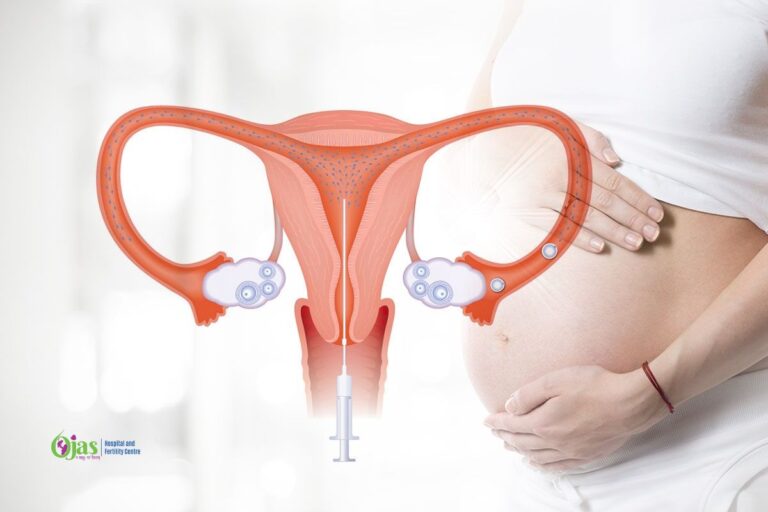
IUI is intrauterine insemination. It is the instillation of processed semen inside the uterine cavity. IUI can be done either with the husband’s semen or with donor semen. It is indicated in mild to moderate male factor infertility, such as oligozoospermia (reduced sperm count), teratozoospermia (abnormal sperm morphology), and asthenozoospermia (reduced sperm motility). Additionally, in cases of non-consummation of marriage (no penetrative intercourse) due to erectile dysfunction, premature ejaculation, etc. IUI with donor semen may be advised in cases of azoospermia in the husband. In female factor infertility, IUI is advised in cases of female subfertility, such as PCOS, endometriosis, unilateral tubal block, and poor ovarian reserve. It may also be advised by your doctor in cases of prolonged unexplained infertility. Now, let’s discuss the process of IUI. The treatment starts on day 2/3 of the menstrual cycle. Your gynecologist will perform a baseline scan to rule out any cysts and check the antral follicle count. Then, they will start some medications for ovulation induction. Gonadotropin injections may be needed in some patients. Serial ultrasounds are required for follicular monitoring. When the follicle is ready (18-20mm size), a trigger is given for the timing of IUI. IUI is done 36-40 hours post HCG trigger. In some cases, double IUI may be suggested, which is generally done both pre and post ovulation. Checking for ovulation is preferable before IUI. However, one can proceed with IUI even if there is no ovulation, as if the trigger is given properly, ovulation will definitely happen in some time, and sperm remain viable for 72 hours. After IUI, medicines are given for 15 days, and then the result can be checked using a urine pregnancy test at home. FAQs:

Demystifying IUI-H Read More »

Pioneering the Path to Parenthood

Recent Advances in IVF Treatment: Pioneering the Path to Parenthood

In the ever-evolving landscape of reproductive medicine, recent advances in In Vitro Fertilization (IVF) have transformed the journey towards parenthood. These innovations not only enhance success rates but also offer new possibilities for individuals and couples facing fertility challenges. Let’s delve into the remarkable strides made in IVF treatment and the promising outcomes they bring. Tailoring IVF protocols to individual needs is becoming increasingly common. With advanced diagnostics, genetic testing, and precise hormone therapies, fertility specialists can create treatment plans that address specific factors affecting fertility, optimizing the chances of success. Embryo development is a critical phase in IVF. Time-lapse imaging technology allows embryologists to monitor embryo growth continuously, capturing essential stages without disturbing their environment. This real-time insight helps select the most viable embryos for transfer. PGT enables the screening of embryos for genetic disorders before implantation. PGT-A (aneuploidy screening) identifies chromosomal abnormalities, while PGT-M (monogenic/single gene disorders) detects specific genetic mutations. This minimizes the risk of passing on inherited conditions to the child. Advances in embryo selection have made it possible to confidently transfer a single embryo with high success rates. This approach reduces the likelihood of multiple pregnancies and associated risks, ensuring healthier outcomes for both mother and baby. Cryopreservation techniques have improved significantly, allowing embryos to be frozen and stored for future use. FET offers flexibility, enabling optimal timing for embryo transfer and potentially improving the uterine environment. ERA evaluates the receptivity of the uterine lining for embryo implantation. This personalized assessment optimizes the timing of embryo transfer, increasing the chances of successful implantation. Gentle ovarian stimulation protocols aim to retrieve a smaller number of high-quality eggs, reducing the risk of ovarian hyperstimulation syndrome (OHSS) and promoting a more comfortable experience for patients. Cutting-edge culture mediums, incubators, and lab conditions enhance the environment for embryo development, simulating the natural uterine environment more accurately. Vitrification is a rapid freezing technique that preserves the quality of eggs and sperm, ensuring minimal damage during the freezing and thawing process, thus improving the viability of stored gametes. The male factor is equally important in fertility. Advanced sperm analysis techniques provide insights into sperm quality, DNA integrity, and potential issues that could impact conception. The landscape of IVF treatment continues to evolve, with each advancement bringing us closer to our ultimate goal: fulfilling the dreams of parenthood. As science and technology converge, the possibilities for creating families expand, offering renewed hope to those seeking to embrace the journey of a lifetime. If you’re considering IVF or seeking the latest insights in fertility, our dedicated team at Ojas Hospital and IVF Center  is here to guide you through these breakthroughs and support you in every step towards your dream of parenthood. Contact us today to explore the transformative world of modern IVF treatments.

Recent Advances in IVF Treatment: Pioneering the Path to Parenthood Read More »

Decoding Male Infertility: A Guide to Empowering Solutions

Decoding Male Infertility: A Guide to Empowering Solutions

Introduction: Male infertility is a complex issue influenced by various factors. At Ojas Hospital, we unravel the triggers and offer empowering solutions for every chapter in your fertility journey. Conclusion: In the realm of male infertility, challenges are opportunities for empowerment. Every chapter in your fertility story is written with the ink of hope and solutions. Let Ojas Hospital be your partner in rewriting the narrative. #MaleInfertility #FertilityEmpowerment #JourneyToHope #OjasHospital #FertilitySolutions

Decoding Male Infertility: A Guide to Empowering Solutions Read More »

Understanding and Preventing Cervical Cancer: A Guide for Cervical Cancer Awareness Month

Introduction: Cervical Cancer Awareness Month is a crucial time to shed light on the importance of understanding, preventing, and screening for cervical cancer. Cervical cancer, primarily caused by certain strains of the human papillomavirus (HPV), is a significant health concern for women worldwide. This blog aims to provide essential information about cervical cancer, its prevention, and the role of early detection in saving lives. Section 1: What is Cervical Cancer? Section 2: Causes and Risk Factors: Section 3: Symptoms and Detection: Section 4: Prevention: Section 5: Cervical Cancer Screening Guidelines: Section 6: Spreading Awareness: Section 7: Supporting Those Affected: Conclusion: As we observe Cervical Cancer Awareness Month, let’s commit to educating ourselves and others about the importance of prevention and early detection. By understanding the risk factors, symptoms, and screening guidelines, we can contribute to a world where cervical cancer is not only treatable but preventable. Together, we can make a difference in the fight against cervical cancer. Note: This structure provides a comprehensive guide for a blog post. Feel free to adjust or expand based on the specific needs of your audience.

Understanding and Preventing Cervical Cancer: A Guide for Cervical Cancer Awareness Month Read More »

Sperm quality is assessed through a comprehensive evaluation known as a semen analysis.

Unveiling the Importance of Sperm Quality in Male Fertility

Introduction: Understanding the nuances of sperm quality is crucial in the journey toward parenthood. A comprehensive semen analysis delves into various parameters, shedding light on the health and viability of sperm. Conclusion: A comprehensive evaluation of sperm quality is pivotal in assessing male fertility. Identifying abnormalities in these parameters allows for targeted interventions, ensuring a better understanding of fertility health. For expert advice on male fertility, consult Ojas Fertility – your partner in the journey toward parenthood. #MaleFertility #SpermHealth #FertilityAwareness #OjasFertility

Unveiling the Importance of Sperm Quality in Male Fertility Read More »

The Lifespan of a Woman’s Eggs: A Journey from Birth to Adulthood

Introduction: The number of eggs a woman has throughout her lifetime is a fascinating aspect of reproductive biology. Let’s explore the stages at which these eggs develop and how their quantity changes over time. Birth: 1-2 Million Eggs At birth, a female baby is born with approximately 1-2 million eggs, a vast reservoir that holds the potential for future pregnancies. These eggs are immature and dormant, awaiting the onset of puberty. Puberty: 500,000 Eggs As a girl enters puberty, usually around the age of 12-14, a significant number of eggs undergo a process called folliculogenesis, where they mature within fluid-filled sacs called follicles. By the time of her first menstrual cycle, the number of eggs has reduced to around 500,000. Adult Age: 300,000 Eggs Throughout a woman’s reproductive years, which extend until menopause, the number of eggs continues to decline. By the time she reaches adulthood, typically in her late teens to early twenties, the number of eggs may reduce to approximately 300,000. This gradual reduction occurs naturally as a result of the monthly release of eggs during the menstrual cycle. By the age of 30, a woman may have about 100,000 eggs, and by the time she reaches menopause, usually in her late 40s to early 50s, the remaining eggs are significantly diminished. Understanding this biological timeline provides insight into the reproductive lifespan of a woman and the factors influencing fertility as she progresses through different stages of life. Conclusion: While the number of eggs decreases over time, the quality of eggs also plays a crucial role in fertility. This understanding becomes essential for women considering family planning and those seeking assisted reproductive technologies. Embracing this knowledge empowers women to make informed choices about their reproductive health.

The Lifespan of a Woman’s Eggs: A Journey from Birth to Adulthood Read More »

Clearing the Vision: Unveiling the Newborn’s Sight

Introduction: Welcoming a newborn into the world is a joyous occasion filled with curiosity about their every little detail. One aspect that might intrigue new parents is their baby’s vision. Let’s explore the fascinating journey of a newborn’s sight, particularly in those early blurry moments. Fact #001: Your Newborn’s Vision is Blurry In the beginning, a newborn’s vision is far from the clarity we experience. At birth, their visual acuity is limited, especially when it comes to objects at a distance. The world around them appears as a slightly hazy landscape. The Early Days: During the initial weeks, a newborn’s eyes are adjusting to the external environment. The structures of the eyes are present, but they are still developing the ability to focus sharply. You might notice your baby looking intently at faces up close, recognizing the contours and patterns that are within their visual range. Visual Development: As the days and weeks progress, so does their visual development. Newborns are particularly attracted to high-contrast patterns, such as black and white designs. These contrasting shapes captivate their attention and aid in stimulating their developing vision. Milestones in Clarity: Around the age of three months, you may observe a significant improvement in your baby’s ability to focus. The once blurry outlines become clearer, and their eyes begin to work together more efficiently, allowing for improved depth perception. Conclusion: Understanding the visual journey of a newborn helps parents appreciate the incredible milestones their baby achieves in the early days. While their vision may start off a bit blurry, the rapid development and adaptation soon bring a world of clarity to their sight. As parents, relishing these visual milestones becomes a part of the magical experience of watching your newborn grow.

Clearing the Vision: Unveiling the Newborn’s Sight Read More »

Scroll to Top